The Hidden Slip Risks That Driveway Cleaning Can Reduce
A driveway does far more than provide a designated parking space; it serves as the primary pedestrian gateway to a home. Every day, family members, guests, mail carriers, and delivery drivers traverse this surface. Because driveways are engineered to be durable, utilitarian structures, property owners often overlook the subtle surface transformations that occur beneath their feet. Over time, environmental exposure causes microscopic contaminants to accumulate, gradually degrading surface friction and turning stable concrete, asphalt, or pavers into hazardous, low-traction walking zones.
In regions like Richmond, Virginia, where distinct seasonal transitions bring substantial https://pastelink.net/4n7eqx59 humidity, prolonged rainfall, and dense tree canopies, the development of invisible slip hazards accelerates rapidly. Many property owners assume that a driveway only becomes slippery when coated in winter ice or visible, standing water. However, the most insidious slip risks are completely dry or only lightly damp, masked by the natural texture of the paving material. Professional driveway cleaning addresses these hidden microbiological and chemical hazards, restoring the friction coefficients necessary to prevent dangerous falls.
The Anatomy of Invisible Slip Hazards
Driveways are constantly exposed to atmospheric moisture, ground runoff, and airborne organic material. These elements combine to form thin surface coatings known as biofilms. A biofilm is a syntrophic consortium of microorganisms—primarily bacteria, microscopic algae, and fungi—that adhere to surfaces and secrete an extracellular polymeric substance (EPS). This EPS matrix functions like an adhesive slime, trapping moisture and dust while anchoring the colony to the porous surface of concrete or stone.
When dry, a mature biofilm may look like nothing more than a faint discoloration or dulling of the driveway's original color. In some instances, it remains entirely undetectable to the naked eye. However, as soon as atmospheric humidity climbs or a light dew settles across the surface, the polymers within the biofilm absorb water and expand. This reaction creates a microscopic hydroplane barrier between footwear and the pavement, drastically reducing the coefficient of friction without presenting the obvious visual warning of a deep puddle.

Beyond microbial colonies, vehicular fluids contribute substantially to hidden traction loss. Leaks of engine oil, transmission fluid, coolant, and brake fluid do not simply wash away with rainfall. Hydrocarbons penetrate deep into the pores of concrete and asphalt. As rainwater flows over these petroleum deposits, the oil separates and floats to the top of the moisture film, creating a slick surface layer. Even months after an oil spot appears to have dried, residual hydrocarbons reactivate during wet weather to produce localized slip spots.
Richmond's Climate and Its Impact on Surface Traction
Richmond features a humid subtropical climate characterized by hot, moisture-laden summers, frequent precipitation, and moderate winters with intermittent freeze-thaw cycles. These environmental conditions create an ideal breeding ground for biological growth on flat exterior surfaces.
Neighborhoods across Richmond—from the mature tree-lined avenues of the Fan and Northside to the expansive properties in Henrico and Chesterfield—often feature heavy canopies of oak, pine, and maple trees. While these trees provide shade and curb appeal, they also drop organic debris, pollen, and sap onto hardscapes. This organic matter serves as a nutrient-rich foundation for algae, moss, and lichen. Furthermore, prolonged shade prevents driveways from drying completely after morning dews or afternoon thunderstorms, allowing biological films to proliferate year-round.
During winter transitions, moisture trapped in the porous layers of an unwashed driveway can freeze beneath the top biofilm layer. Even when ground temperatures rise slightly above freezing, biological growth retains cold moisture, resulting in black ice forming faster and lingering longer on dirty surfaces than on clean, porous concrete.
Common Driveway Contaminants That Threaten Pedestrian Safety
Understanding the specific contaminants that threaten traction helps homeowners recognize why basic rinsing fails to maintain safe walking surfaces. Driveways accumulate a diverse array of organic and inorganic elements:
- Microscopic Cyanobacteria: Often mistaken for dirt, these organisms produce dark staining and an ultra-slick microscopic layer that reactivates instantly upon contact with moisture.
- Algae and Fungal Mats: Thriving in shaded areas, these growths form spongy, moisture-trapping mats that destroy the natural grip of broom-finished concrete.
- Decomposing Organic Matter: Tannins from decaying leaves and pollen create a slick residue that binds with fine soil particles, creating a muddy glaze on paved surfaces.
- Hydrocarbon Films: Emulsified petroleum products from vehicles that rise to the surface whenever humidity or light rain is present.
- Efflorescence and Mineral Salts: Subsurface minerals brought up by moisture migration that crystalize and break down aggregate grip, leading to loose, chalky surfaces that cause slips.
How Different Driveway Materials React to Contamination
Every paving material features distinct physical characteristics that influence how slip risks develop and how they must be managed.
Poured and Broom-Finished Concrete
Broom-finished concrete is intentionally textured during installation to provide traction. The ridges and grooves are designed to channel water away from the contact patch of footwear and vehicle tires. However, these identical microscopic channels also trap dirt, biological spores, and automotive fluids. Over time, organic matter fills the recessed textures, neutralizing the mechanical grip designed into the pavement. Once these channels are compacted with grime, the surface acts like polished stone when wet.
Interlocking Pavers and Brick
Paver driveways present unique safety challenges due to the joint sand between individual stones. Weeds, moss, and algae colonize joint lines rapidly, establishing dense root systems that spread horizontally across the paver faces. Because brick and concrete pavers are highly porous, they absorb significant amounts of water. If biofilms establish themselves on the surface, moisture remains locked at the surface level, making pavers notoriously slick underfoot.
Asphalt
Asphalt driveways are composed of aggregates bound together by petroleum-based bitumen. While coarse asphalt provides strong initial traction, wear and tear smooths the surface aggregate over time. When biological growths settle into the small voids of an aging asphalt surface, they degrade the binders while creating a frictionless biological film that makes steep asphalt driveways hazardous to walk on.
The Limitations of Conventional Garden Hoses
Many homeowners attempt to mitigate slip risks by periodically spraying their driveways with a standard garden hose. While this removes loose surface leaves and visible topsoil, it does virtually nothing to eliminate bonded biofilms or embedded oils. Household water pressure—typically measuring between 40 and 60 pounds per square inch (PSI)—lacks the kinetic energy required to dislodge biological organisms anchored within the surface pores.
In fact, rinsing a driveway with a garden hose without applying sanitizing detergents can worsen the problem. Providing additional moisture to established colonies of algae and bacteria without removing them simply accelerates their growth rate, compounding the slip risk in subsequent days.
How Professional Pressure Washing and Surface Cleaning Restore Safety
Restoring a driveway's mechanical grip requires an integrated approach that combines mechanical agitation, appropriate water pressure, and specialized chemical treatments. Commercial pressure washing and power washing systems operate at controlled pressures paired with high-volume water output, allowing technicians to scour the microscopic crevices of the substrate without damaging the concrete's structural integrity.
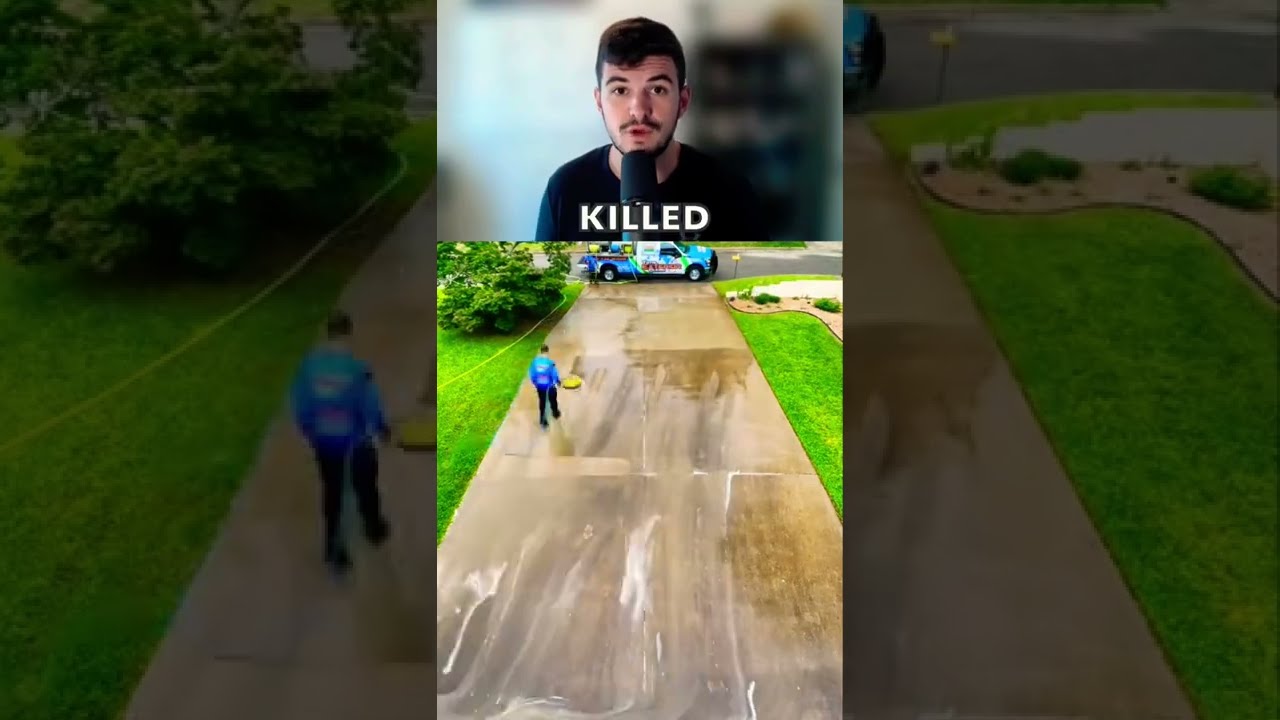
Rather than using handheld spray wands that can leave uneven striping and incomplete coverage, experienced technicians utilize rotary surface cleaners. These tools feature balanced spray bars that rotate inches above the pavement, delivering consistent water impact across every square inch of the driveway. This process dislodges the impacted dirt and dead biological matter that fill the concrete's traction grooves.
Equally critical is the application of targeted algaecides and surfactants. Professional cleaning solutions break down the EPS matrix holding biofilms together, neutralizing the spores responsible for microbial growth. This deep-sanitizing step ensures that the biological organisms do not immediately recolonize the surface after the initial wash, keeping the driveway slip-resistant for months to come.
The Interconnection Between Driveway Maintenance and Complete Property Care
A driveway does not exist in isolation; it is an integral component of a property's overall exterior ecosystem. Contaminants that accumulate on the driveway often originate from higher elevations on the home. For example, roof surfaces plagued by Gloeocapsa magma or moss continually shed organic spores into the gutter system during storms. When gutters overflow or downspouts empty directly onto or adjacent to a driveway, those spores wash directly over the pavement, reinoculating the flat surfaces with slick biological material.
Coordinating comprehensive exterior maintenance—such as periodic roof cleaning and soft-wash house washing—protects the investment made in clean flatwork. Removing the biological loading from siding and roofing materials prevents the downward transfer of algae and lichen to walkways and driveways. By pairing vertical and horizontal washing schedules, property owners ensure that runoff water remains clean and free of the microorganisms that contribute to pedestrian slip hazards.
Proactive Driveway Maintenance Strategies
Preserving optimal traction requires a proactive maintenance schedule rather than waiting until a surface visibly turns green or black. Implementing a structured maintenance routine ensures ongoing pedestrian safety throughout the year.
- Schedule Biannual Inspections: Examine high-traffic areas, transition zones near steps, and heavily shaded sections for any loss of surface grip, particularly in early spring and late autumn.
- Manage Immediate Contamination: Absorb fresh vehicular fluids immediately using clay-based absorbents to prevent hydrocarbons from soaking deep into porous concrete matrices.
- Trim Back Overhanging Foliage: Prune tree limbs that cast continuous shade over the driveway to allow sunlight and wind to naturally dry moisture from the surface.
- Divert Gutter Outflows: Extend downspouts away from flat concrete and walkways to minimize constant moisture and biological deposits across walking paths.
- Engage Professional Surface Cleaning Services: Invest in regular professional deep cleaning to systematically remove subsurface biofilms, eradicate deep-seated spores, and clear away impacted soil.
Premises Liability and Practical Risk Reduction
Property owners carry a legal and ethical duty of care to maintain safe premises for anyone visiting their property. Under standard premises liability principles, homeowners can be held accountable for injuries resulting from hazardous conditions that they knew—or reasonably should have known—existed on their property. Slips and falls frequently result in severe injuries, including contusions, bone fractures, torn ligaments, and head trauma, particularly among elderly visitors.
With the continued growth of residential parcel deliveries and on-demand courier services, foot traffic across driveways and approach paths is higher than ever. Delivery personnel often carry heavy, bulky packages that obstruct their view of the ground, relying entirely on the pavement to provide predictable, uniform traction. A slip hazard hidden beneath a seemingly dry, discolored patch of concrete presents a severe liability exposure.
Routine, documented exterior maintenance serves as tangible evidence of a homeowner's commitment to property safety. By scheduling consistent surface washings, property owners demonstrate proactive care, significantly reducing the probability of preventable pedestrian accidents.
Protecting Surface Longevity Beyond Traction
While pedestrian safety remains the primary reason to eliminate hidden slip hazards, professional driveway cleaning also safeguards the physical durability of the pavement. The very biological agents that cause slick walking conditions—lichen, moss, and acid-producing bacteria—actively degrade stone and concrete. Moss shoots anchor into the micro-pores of concrete, widening cracks and facilitating water entry. During Richmond's winter months, this trapped water expands as it freezes, resulting in surface spalling, pitting, and structural cracking.
Additionally, unaddressed motor vehicle fluids break down the chemical bonds in asphalt, softening the binder until potholes form. Routine cleaning prevents early material failure, sparing homeowners the substantial financial cost of premature driveway replacement.
Looking Ahead: Maintaining Standards into 2027 and Beyond
As exterior cleaning technologies continue to advance, standard practices have shifted toward environmentally responsible, low-pressure sanitization methods paired with precision rotary surface scrubbing. Forward-thinking property owners understand that maintaining outdoor living spaces requires consistent care, especially given the increasingly unpredictable precipitation patterns observed in recent years.
Looking ahead toward 2027 and future years, integrating professional surface sanitization into an annual home maintenance schedule is becoming standard practice for responsible property ownership. Safe, high-traction driveways are not accidental; they are the direct result of understanding the invisible hazards that nature deposits on exterior surfaces and using the right methods to eliminate them.
Richmond Pressure Cleaning
Unit 2/420 Church St, Richmond VIC 3121
ph. (03) 4231 7213
Corrections
Spot something wrong? Send it to the desk and it gets fixed in the open.